Tech Talk · Riding Technique
How to Brake on a Bike: The Complete Guide for Road, MTB & Gravel
The gap between a good rider and an exceptional one isn’t measured at the pedals. It’s measured at the levers, in the ability to brake late, brake right, and brake with the precision that wins races or keeps a rider upright through a tricky corner.
Road, gravel, or MTB: the terrain changes but the physics doesn’t. This AMP guide walks through the fundamentals to transform your braking, gaining both safety and performance.
Pre-ride mechanical checks
No riding technique compensates for a faulty brake system. A few quick checks are enough to guarantee a reliable response, ride after ride.
- 🔧 Brake padsEven wear and sufficient remaining thickness. Asymmetric wear signals a misaligned caliper.
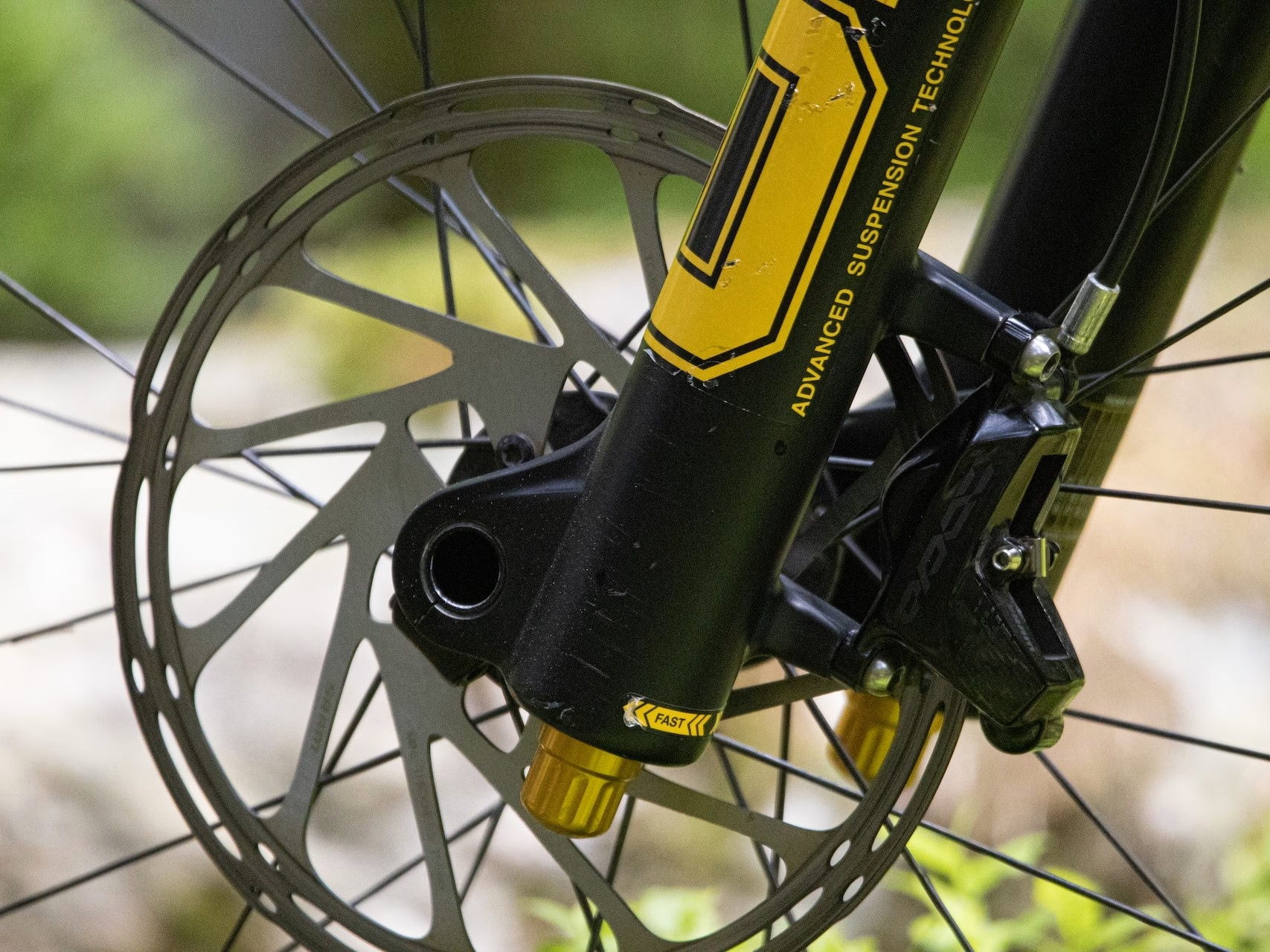
- 💿 Rotor and pad surfaceMatte finish, no shiny spots. A vitrified surface indicates glazing, a heat-induced hardening that permanently degrades bite.
- 💧 Hydraulic linesConsistent, firm lever travel. If the lever needs pumping to recover power, there’s air in the system and a bleed is overdue.
- 🛞 Tire pressureAs per manufacturer specs. An underinflated tire kills grip and caps the braking force actually transferable to the ground.
- 🔩 Thru-axlesTorqued to spec. A loose axle can shift under load and throw off rotor/caliper alignment.
⚠ Miss a single check and even the best rider can’t compensate. A mechanically sound bike remains the first condition of controlled braking.
Three physical principles to master
Three physical laws govern every action at the levers. Understanding them is what makes the difference between a braking pattern that works and one that doesn’t.
Weight transfer. When braking, the rider’s mass shifts forward. The front wheel loads up and gains grip while the rear unloads. 70 to 80% of usable braking power comes from the front brake.
Modulation. The ability to meter lever pressure precisely. Progressive braking preserves grip ; lock-up makes it vanish instantly, turning the tire into an ice cube the bike slides on without slowing.
Thermal management. The longer the braking lasts, the hotter the system runs. Past a critical threshold, performance collapses : this is fading. Alternating firm braking with release phases lets the system cool.
MTB braking technique
MTB remains the discipline where grip varies most. Wet roots, loose rocks, soft dirt, off-camber sections: braking has to be more instinctive here than anywhere else.
Modulate both brakes simultaneously, with measured pressure. On the front, feel for the lock-up threshold without crossing it. On the rear, a controlled drift remains acceptable, even useful for orienting the bike on technical descents.
Shift weight back on steep descents, without unloading the front. Lean the torso over the bars to load both wheels. A loaded wheel is a wheel that bites.
Brake in a straight line, never mid-corner. Lateral grip and longitudinal grip both draw from the same reserve: braking in a turn invites the crash. Braking must end before the apex.
On long descents: favor firm, short brake applications over a constant drag. The savvy rider lets the system breathe between brakings.
Road braking technique
On tarmac, grip is more predictable but speeds are higher and the cost of a mistake heavier. Discipline of the gesture makes all the difference.
Brake progressively. A smooth pressure ramp minimizes brutal weight transfers and preserves stability, especially at high speed.
On long descents, alternate firm brakings and pressure-free phases. Holding a constant brake drag heats the system, glazes the pads and rotor, and ends up degrading bite, sometimes irreversibly.
Approach corners while braking in a straight line. Entering the turn happens while releasing the brakes, eyes on the exit. This anticipation is what carries speed through the bend.
⚠ In a peloton or group ride: brake even more progressively. A sharp lever pull endangers the riders behind who didn’t see the obstacle coming.
Gravel braking technique
Gravel is the art of compromise. Wider tires, more upright position, but surfaces with unpredictable coefficients of friction. Finesse beats power.
Adjust weight distribution to the surface. On loose paths, shift back slightly to load the rear and preserve front-end grip. On hard, rolling surfaces, standard road position works.
Brake even more progressively than anywhere else. A trail’s friction coefficient remains far lower than asphalt. Lock-up comes fast, and control is harder to recover.
Strictly avoid mid-corner braking, on gravel or dirt. Lateral grip loss is immediate and unpredictable.
On singletrack descents, favor small, well-metered brake taps over firm applications that can break traction. Modulation trumps raw power.
The mistakes that sabotage braking
- 🛑 Panic lock-up. A skidding wheel has zero stopping power. The fix is progressive modulation, never the lever pinned to the bar.
- 🔥 Holding a constant brake drag downhill. Accumulated heat, guaranteed glazing. Alternate firm braking with full release.
- ↩️ Braking mid-corner. The lateral grip reserve runs out and the bike slides. Braking ends before the lean.
- 👁️ Staring at the obstacle instead of the exit. The bike goes where the eyes go. Look far, anticipate.
- 💪 Overrelying on the rear brake. It accounts for only 20 to 30% of usable power. Learning to meter the front is what actually slows the bike.
From theory to practice
Braking can’t be read, it has to be practiced. Training in a controlled environment (empty parking lot, quiet road) allows feeling the bike’s limits. Test the front brake alone, then the rear alone, then both together. Learn to recognize the lock-up threshold before it hits.
Once those sensations are dialed in, apply them on the road. The action becomes automatic and frees attention for what actually matters: reading the road, anticipating the line, picking the right moment.
To push braking even further, explore the full AMP brake pad range, engineered for consistent bite and first-rate fade resistance, ride after ride.